Medical Disclaimer
  • For Educational Purposes Only: This content is intended for educational reference and should not be used for clinical decision-making.
  • Not a Substitute for Professional Judgment: Always consult your local protocols, institutional guidelines, and supervising physicians.
  • Verify Before Acting: Users are responsible for verifying information through authoritative sources before any clinical application.
AI Assistance Notice
The clinical content and references are curated and reviewed by myself; however, AI was used to assist in organizing, paraphrasing, and formatting the information presented.

Bedside Topline (What to Remember First)

Overview & Types of ECMO

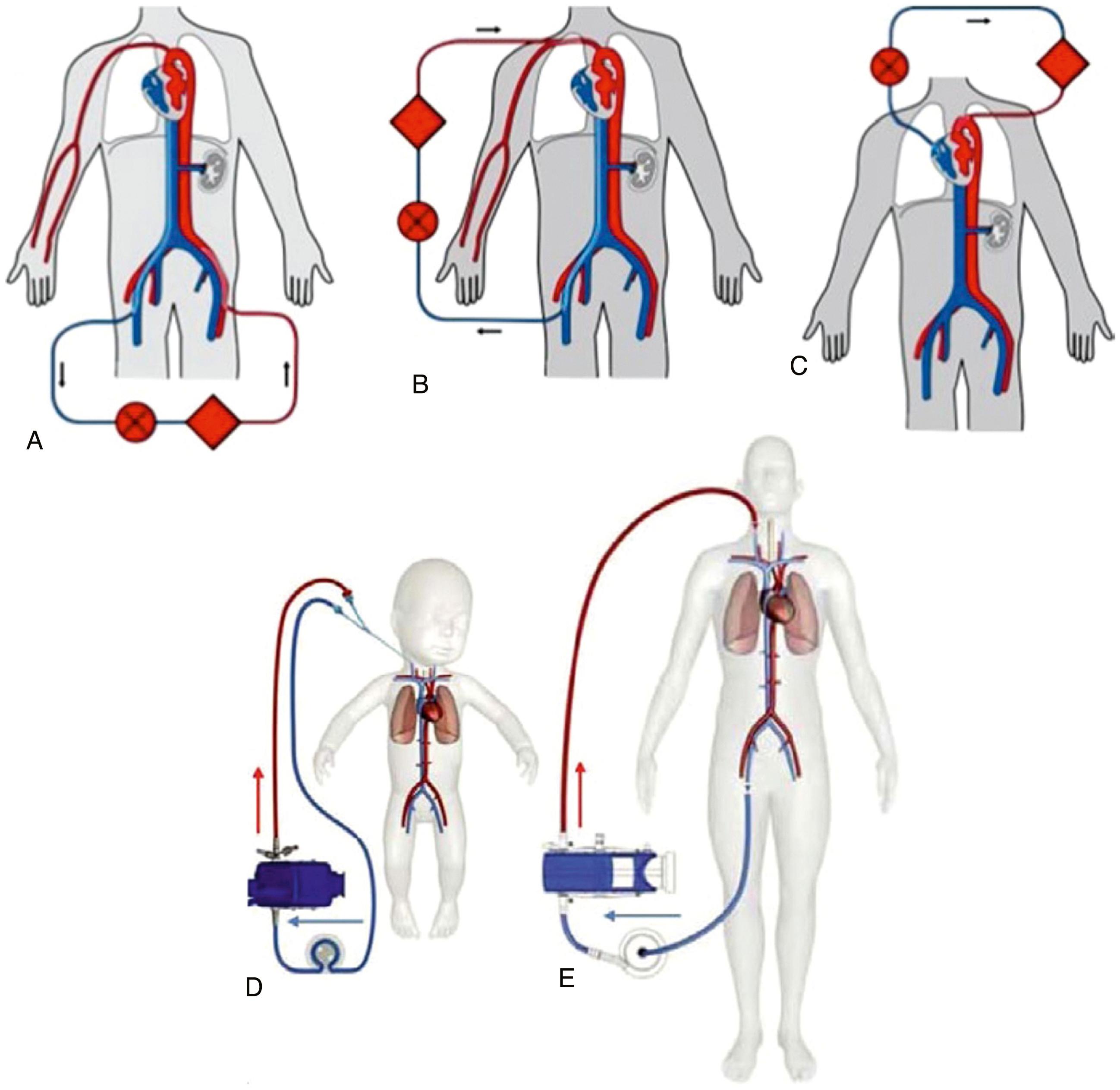
Extracorporeal membrane oxygenation (ECMO) is a temporary form of mechanical cardiopulmonary support for patients with severe, potentially reversible respiratory and/or cardiac failure refractory to conventional therapy. Blood is drained from the venous system, pumped through a membrane oxygenator, and then returned either to the venous or arterial circulation.

Typical Indications (Big-Picture)

  • Severe, reversible respiratory failure (e.g., ARDS, massive pneumonia, aspiration) with refractory hypoxemia/hypercapnia despite optimal ventilator strategy → VV ECMO
  • Cardiogenic shock or cardiac arrest with potentially reversible cause (e.g., acute MI, myocarditis, massive PE, post-cardiotomy) → VA ECMO (or ECPR protocols)
  • Bridge to decision / transplant / durable LVAD in selected advanced heart failure or pulmonary hypertension patients
Remember: ECMO buys time for recovery or decision-making. It is NOT a destination therapy – always have a clear exit strategy (recovery, transplant, withdrawal).
VV vs VA ECMO – Quick Comparison
Swipe to see more
Mode Cannulation Concept What It Supports Typical Use Key Risks
VV ECMO Venous drainage → pump/oxygenator → venous return (e.g., femoral vein to RIJ or dual-lumen cannula) Respiratory support ONLY (oxygenation & CO₂ removal); hemodynamics unchanged or may improve indirectly Severe ARDS, refractory hypoxemia/hypercapnia, bridge to lung recovery/transplant Recirculation, cannula malposition, inadequate flows in high cardiac output states, bleeding, thrombosis
Peripheral VA ECMO Venous drainage (usually femoral vein/RA) → pump/oxygenator → large artery (usually femoral) Both circulatory and respiratory support; may largely replace cardiac output Cardiogenic shock, ECPR, post-cardiotomy failure, massive PE (with RV failure) Limb ischemia, LV distension/pulmonary edema, differential hypoxemia (North–South syndrome), stroke, bleeding, Harlequin physiology
Circuit Components & Configuration

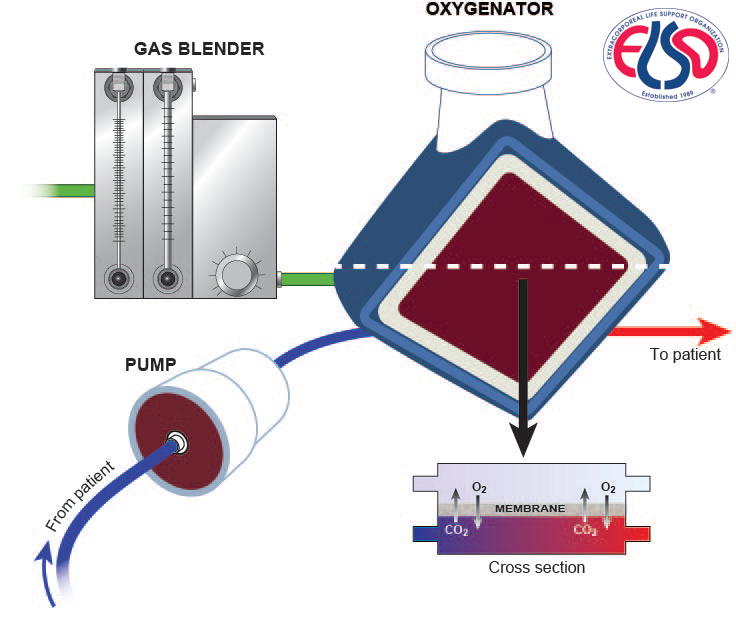
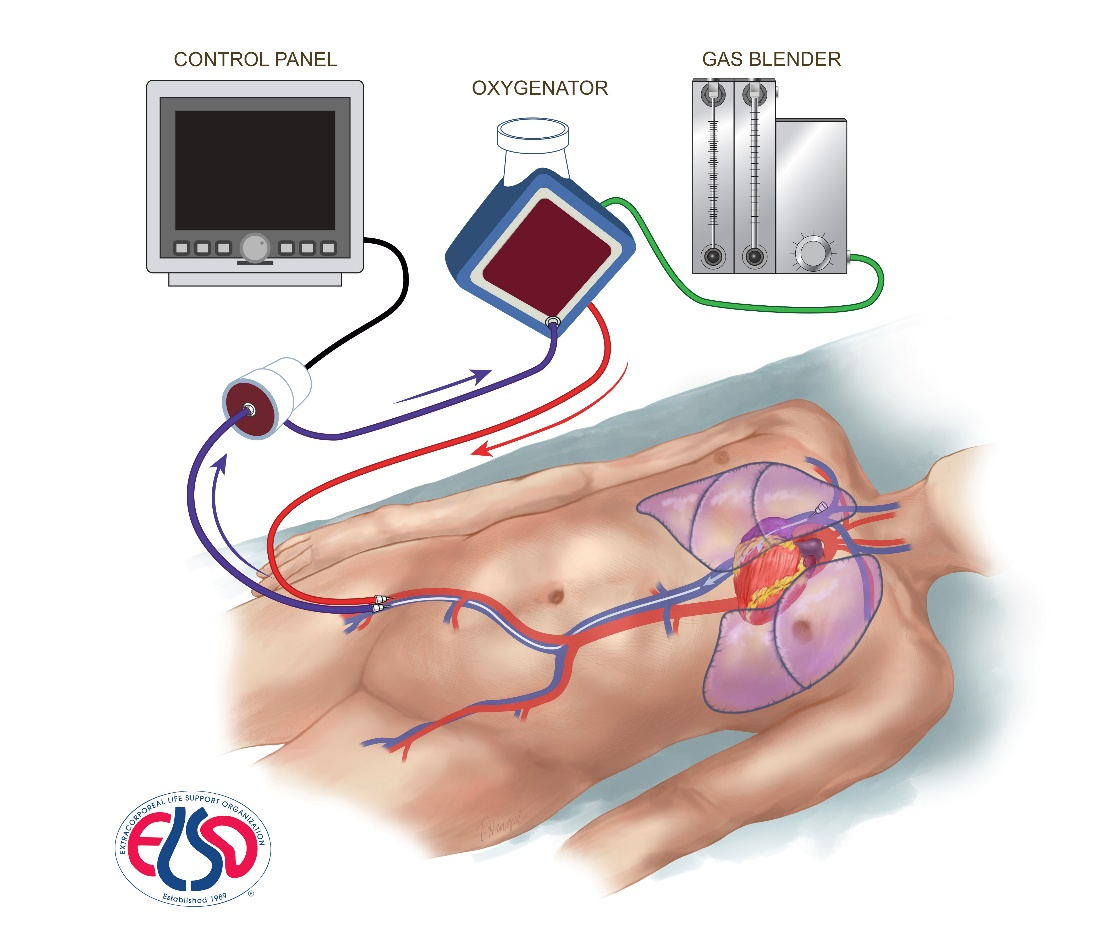
The ECMO circuit is conceptually the same for VV and VA modes: a large-bore venous drainage cannula, a centrifugal pump, a membrane oxygenator with integrated heat exchanger, and a return cannula. VV returns oxygenated blood to a central vein; VA returns it to an artery, usually femoral.

Core Components

  • Drainage cannula: pulls deoxygenated blood from venous system (RA/vena cava). Negative pressure → risk of venous collapse and hemolysis if underfilled
  • Centrifugal pump: sets circuit blood flow (L/min); higher flow improves oxygenation and circulatory support but increases shear stress and hemolysis risk
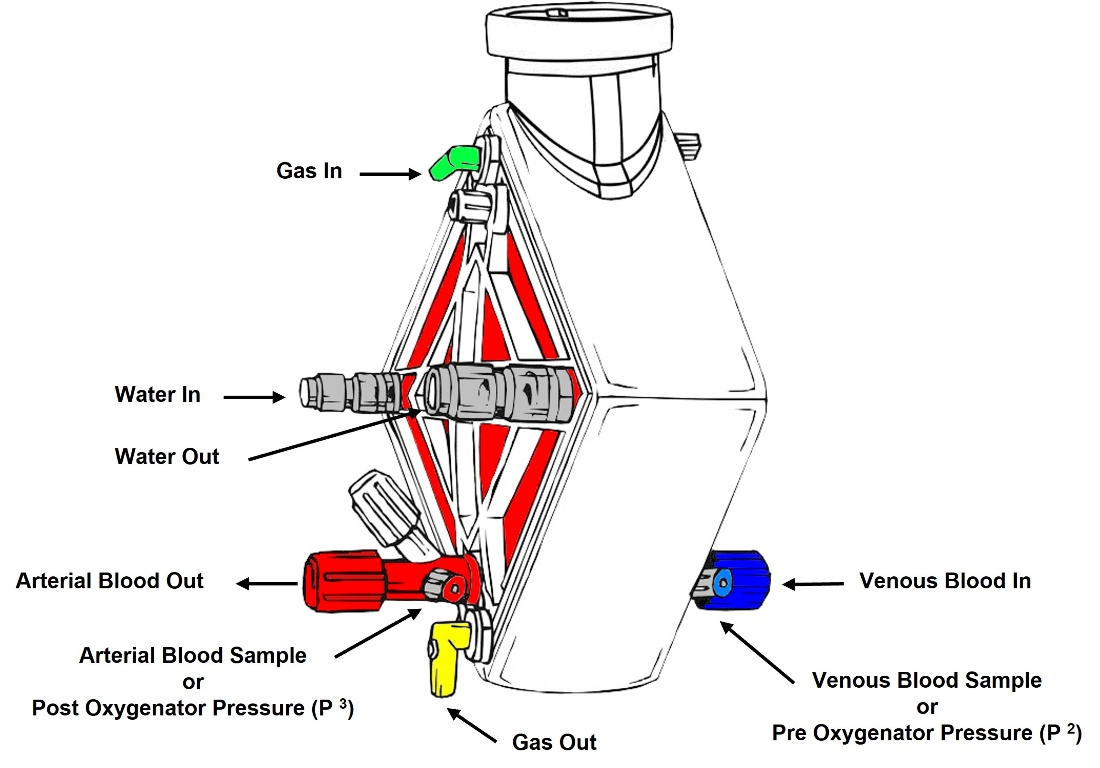
  • Membrane oxygenator + heat exchanger: gas exchange (O₂ in, CO₂ out) and blood warming. Oxygenation depends mainly on blood flow and FiO₂; CO₂ removal depends on sweep gas flow
  • Return cannula: returns oxygenated blood to venous (VV) or arterial (VA) circulation, determining whether ECMO supports just lungs or both heart and lungs
Circuit Pearl: Always trace the circuit from patient → drainage → pump → oxygenator → return → patient. Understanding the flow path is critical for troubleshooting.
VV ECMO – Physiology & Bedside Management

VV ECMO Physiology – What the Pump is Actually Doing

  • Drainage cannula removes deoxygenated blood from the venous system, sends it through the oxygenator, and returns oxygenated blood to the central venous circulation
  • The native RV and LV still pump all systemic flow; the circuit simply "pre-oxygenates" a portion of venous return
  • Effective arterial oxygenation depends on the ratio of ECMO flow to native cardiac output and the degree of recirculation
  • Recirculation = oxygenated blood from the return cannula is immediately re-drawn into the drainage cannula instead of passing through the lungs → SaO₂ stays low despite high ECMO flows

Targets & Ventilator Strategy

  • ECMO blood flow: generally 60–80% of estimated cardiac output (e.g., 4–5 L/min in an average adult) to achieve acceptable oxygenation
  • Sweep gas: primarily determines CO₂ removal; increasing sweep increases CO₂ clearance (risking respiratory alkalosis if excessive)
  • FiO₂ to oxygenator: titrate to maintain acceptable PaO₂/SaO₂ while minimizing oxygen toxicity to membrane
  • Lung "rest" strategy: low tidal volume (e.g., 3–4 mL/kg), low plateau/drive pressure, moderate PEEP to prevent atelectasis, low respiratory rate – ECMO handles most gas exchange
Ventilator Settings on VV ECMO: Think "ultra-protective" – TV 3-4 mL/kg, plateau pressure <25 cmH₂O, PEEP 10-15 cmH₂O, RR 10-15. ECMO does the heavy lifting for gas exchange.

Common VV ECMO Problems and Bedside Patterns

Swipe to see more
Problem Monitor Clues Likely Causes Bedside Actions
Low SaO₂ despite high ECMO flow Low arterial SaO₂, ECMO flow near max; normal sweep; oxygenator pressures OK High native cardiac output (sepsis/fever) diluting ECMO blood; recirculation; inflow cannula malposition; severe shunt through native lungs Check cannula position with ultrasound/X-ray; evaluate recirculation (pre/post-oxygenator saturations); treat fever/sepsis; consider increasing ECMO flow if possible or switching mode (e.g., VA) in mixed shock
High PaCO₂ / low pH High PaCO₂ on gas; ECMO flows adequate; oxygenation OK Inadequate sweep gas flow; oxygenator failure; massive CO₂ production (sepsis, seizures) Increase sweep gas; check for oxygenator performance issues; control metabolic demand (sedation, antipyresis)
High negative drainage pressures / "chattering" cannula Drainage pressure alarm, visible tubing vibration, intermittent flow Relative hypovolemia, high intrathoracic/intra-abdominal pressure, catheter against vessel wall Lower ECMO flow temporarily; give volume if appropriate; adjust patient position and cannula depth; optimize ventilator and PEEP
Recirculation Pearl: To estimate recirculation: compare post-oxygenator SaO₂ (should be ~100%) with pre-oxygenator SaO₂. If pre-ox SaO₂ is high (>70-80%), suspect significant recirculation.
VA ECMO – Physiology & Bedside Management

VA ECMO Physiology – Heart–Circuit Interaction

  • Peripheral VA ECMO drains venous blood (usually via femoral/RA cannula), oxygenates it, and returns it retrograde into a large artery (usually femoral)
  • The pump provides forward flow into the aorta; native LV ejection (if present) competes with retrograde ECMO flow
  • If LV function is poor, aortic valve opening may be infrequent or absent → risk of LV distension, elevated LVEDP, and pulmonary edema
  • Arterial oxygenation becomes regionally heterogeneous: upper body may receive more native LV output, lower body more ECMO flow (source of North–South/Harlequin syndrome)

Hemodynamic Targets

  • MAP: ~60–70 mmHg (individualized); too low → poor organ perfusion; too high → excessive afterload on LV and circuit
  • ECMO flow: often 3–5 L/min, aiming for at least 60% of cardiac output early in shock; titrated to lactate, venous saturations, and organ perfusion
  • Pulse pressure: ideally ≥10–15 mmHg to indicate some native LV ejection; completely flat pulse over time suggests LV standstill and potential distension
LV Distension Warning: Loss of pulse pressure + pulmonary edema on CXR = LV distension until proven otherwise. Requires urgent intervention (inotropes, vent strategies, or mechanical LV unloading).

Classic VA ECMO Complications & Bedside Clues

Swipe to see more
Problem Monitor Clues Mechanism Bedside Actions
LV distension & pulmonary edema CXR with new pulmonary edema; rising PA pressures/PCWP; loss of arterial pulsatility; poor LV ejection on echo ECMO flow maintains MAP but aortic valve rarely opens; LV still receives venous return from bronchial veins/coronaries → volume trapped in LV Optimize afterload (lower MAP if safe), add inotrope to encourage LV ejection, consider vent strategies (IABP, Impella, atrial septostomy, surgical vent) per institutional protocols
North–South (Harlequin) syndrome Right radial ABG with low PaO₂ while femoral arterial line shows good saturation; differential cyanosis (pink legs, blue upper body) Native LV ejects poorly oxygenated blood from failing lungs into aortic root while ECMO returns well-oxygenated blood retrograde via femoral artery Improve lung oxygenation (ventilation/FiO₂), increase ECMO flow, adjust return cannula (axillary/subclavian) or convert to central configuration as per surgical team
Limb ischemia (peripheral VA) Cool, pale, painful or pulseless limb distal to arterial return cannula; delayed capillary refill, loss of Doppler signals Large-bore arterial cannula compromises distal flow, especially if no distal perfusion catheter is used Urgent vascular assessment; ensure or insert distal perfusion catheter; optimize anticoagulation; consider cannula repositioning or surgical intervention
Harlequin Monitoring Pearl: On peripheral VA ECMO, always monitor BOTH right radial (upper body) and femoral (lower body) saturations. A difference >10% suggests differential hypoxemia.
Anticoagulation & Hematology on ECMO

General Principles

  • The circuit is highly thrombogenic: large foreign surface area, areas of stasis, and non-physiologic shear → routine systemic anticoagulation unless contraindicated
  • Unfractionated heparin is most common; monitoring via ACT, aPTT, or anti-Xa depending on institutional protocol
  • Balance = prevent clot/oxygenator failure while minimizing bleeding (surgical sites, cannulation sites, intracranial hemorrhage)

Hemolysis & Acquired von Willebrand Syndrome

  • Shear stress from pump and high flows can cause hemolysis: monitor plasma-free hemoglobin, LDH, bilirubin, and dark urine
  • Ongoing hemolysis may reflect high circuit flows, pump head thrombosis, or cannula-related shear; may require flow reduction, circuit change, or pump head change
  • Prolonged ECMO leads to high shear across the circuit and oxygenator, causing loss of high-molecular-weight vWF multimers → acquired von Willebrand syndrome and mucosal/GI bleeding
Anticoagulation Targets: Typical goals are ACT 180-220 seconds or anti-Xa 0.3-0.5 units/mL. Always follow institutional protocols and adjust based on bleeding/clotting balance.
Hemolysis Warning: Pink/red plasma, rising lactate, falling haptoglobin, dark urine = hemolysis. Check circuit pressures, flows, and consider circuit change.
Daily ECMO Bedside Checklist
  1. Confirm mode and configuration: VV vs VA, cannulation sites, and flow direction
  2. Check flows & pressures: circuit flow (L/min), drainage and return pressures, pre- and post-oxygenator pressures, any rising trends suggesting clot
  3. Review gas settings: FiO₂ to oxygenator, sweep gas, patient ventilator settings, and recent blood gases (arterial + pre/post-oxygenator if available)
  4. Assess hemodynamics: MAP, pulse pressure, vasoactive support, lactate, urine output
  5. Inspect cannula sites: bleeding, hematoma, infection signs, limb perfusion distal to any arterial cannula
  6. Review anticoagulation and labs: coagulation profile, anti-Xa/ACT, Hgb, platelets, free Hgb, electrolytes (especially K⁺, Ca²⁺), and organ function tests
  7. Evaluate neurologic status: sedation depth, pupils, ability to perform neuro exams when feasible
  8. Plan for mobilization/positioning: as allowed by cannula configuration and team consensus
Daily Rounds Pearl: Use a systematic approach: Circuit → Gas exchange → Hemodynamics → Coagulation → Neurologic → Plan. This ensures nothing is missed.
Rapid Troubleshooting – What to Check First
Swipe to see more
Problem Mode Key Questions Immediate Checks First-Line Actions
Low ECMO flow VV or VA Is drainage pressure very negative? Has volume status changed? Any kinks or patient position changes? Check catheter position, tubing kinks, patient position, intrathoracic pressure/PEEP, volume status Reposition patient; remove kinks; give volume if appropriate; temporarily lower target flow and escalate to ECMO specialist
Hypoxemia on VV ECMO VV Is ECMO flow adequate vs CO? Any recirculation? Vent settings appropriate? Check cannula position; compare pre/post-oxygenator sats; review vent settings and CXR; evaluate for increased CO (fever, sepsis) Increase ECMO flow if possible; treat sepsis/fever; optimize cannula position and ventilator; consider mode change if hemodynamics also failing
Hypotension on VA ECMO VA Is ECMO flow adequate? Any major bleeding or tamponade? Sepsis? LV distension? Check circuit flows and pressures, bedside echo, cannula sites, chest drains, lab values (Hgb, lactate) Increase ECMO flow and vasopressors as needed; treat bleeding; evaluate for tamponade or LV failure; escalate to MCS/ECMO team
Sudden loss of gas exchange VV or VA Is the oxygenator failing or pump off? Gas supply interruption? Check pump power, alarms, sweep gas connections, FiO₂ source, and oxygenator pressures Switch to backup power; restore gas supply; prepare for urgent oxygenator/circuit change per institutional protocols
Emergency Response: For circuit failure or sudden decompensation, hand-bag the patient immediately and activate ECMO emergency team. Have emergency cart with clamps and backup circuit readily available.
Transport & Practical Nursing/Paramedic Pearls
  • ECMO patients are equipment-dense: always identify and trace lines (drainage, return, ventilator tubing, monitoring, infusions) before any move
  • Secure the ECMO console and tubing before transport; ensure battery life and backup power plans are adequate
  • Never clamp or kink ECMO lines without clear orders and knowledge of consequences; air entrainment or sudden circuit stop can be catastrophic
  • For VA ECMO with femoral cannulation, protect the cannulated groin from hip flexion and keep limb straight; check distal pulses or Doppler signals regularly
  • In an arrest on ECMO: follow institutional ECLS protocols; high-quality CPR may still be necessary (especially VV or low-flow VA); defibrillate safely away from circuit
  • Communicate clearly at handover: mode, flows, sweep, anticoagulation, recent complications (bleeding, hemolysis, limb ischemia, neurologic events), and escalation/weaning plans
Transport Checklist:
  1. Battery fully charged (minimum 60 min for intra-hospital transport)
  2. Backup O₂ tanks and sweep gas supply secured
  3. All lines and cannulas secured with occlusive dressings
  4. Emergency cart with clamps and hand crank following
  5. ECMO specialist or trained RN accompanying patient
  6. Receiving team briefed on ECMO mode, flows, and recent issues
Quick Teaching Script for Learners
  1. Identify mode and purpose: Is this VV (lung only) or VA (heart + lung)? Why did this patient get ECMO in the first place?
  2. Walk the circuit: Start at the drainage cannula, follow blood through pump and oxygenator, and back to the patient – say what each part does
  3. Check the three pillars:
    • (a) Gas exchange (blood gases, sweep, FiO₂)
    • (b) Circulation (MAP, flows, pulse pressure)
    • (c) Coagulation/hematology (labs, bleeding, hemolysis)
  4. Scan for complications: limb ischemia, neurologic changes, pulmonary edema, recirculation/hypoxemia, LV distension (for VA), access site bleeding
  5. End with goals: what are today's ECMO goals (wean flows, adjust vent, mobilize, assess for decannulation, or just survive the next 12 hours)?
Teaching Tip: Have learners verbalize the circuit path while physically pointing to each component. This kinesthetic learning dramatically improves understanding and retention.
References
  1. Farkas, J. (2024). ECMO manual. Internet Book of Critical Care (IBCC), EMCrit Project. https://emcrit.org/ibcc/ecmo/
  2. Nickson, C. (2019). ECMO – Extra-corporeal membrane oxygenation. Life in the Fast Lane. https://litfl.com/ecmo/
  3. Nickson, C. (2019). Everything ECMO. Life in the Fast Lane. https://litfl.com/everything-ecmo/
  4. Vyas, A., et al. (2023). Extracorporeal membrane oxygenation in adults. In StatPearls. StatPearls Publishing.
  5. ELSO. (2023). Extracorporeal membrane oxygenation (ECMO) guidelines. Extracorporeal Life Support Organization. https://www.elso.org/resources/guidelines
  6. Chan, K. Y., et al. (2017). Clinical use of venovenous extracorporeal membrane oxygenation. Hong Kong Medical Journal, 23(2), 168–177. https://www.hkmj.org/abstracts/v23n2/168.htm
  7. Moiroux, A., et al. (2021). ECMO in cardiac arrest: A narrative review of the literature. Journal of Clinical Medicine, 10(3), 534. https://www.mdpi.com/2077-0383/10/3/534
Additional Resources:
  • ELSO Red Book (General Guidelines for ECMO Centers)
  • Institutional ECMO protocols and nursing guidelines
  • ECMO console manufacturer documentation (e.g., Maquet, Medtronic)
  • Regional ECMO center consultation protocols
Back to Critical Care Corner E3 Learning Home